Play Video

The Union of Tosepan Cooperatives comprises more than 400 cooperatives of rural and indigenous communities in the highlands of Puebla and Veracruz in Mexico, all working together to develop projects to improve each community's quality of life in a way that is comprehensive and in keeping with their own aspirations. These projects include establishing common cooperatives to supply themselves with basic products and to sell their crops without intermediaries; to save money and loan it among the communities themselves; to defend their territory against external mega-projects; to train themselves to be able to implement projects and to improve housing. They have also built health centers and an intercultural school.
info 2022
For hundreds of years, the rural and indigenous communities living in the mountains of northeastern Puebla, Mexico, have been confronted by people who want to take over their lands and exploit their natural resources. Early on it was the conquistadors, then the large landowners and more recently it has been governments and national and international companies looking to carry out projects that have little to do with local needs without even consulting the communities, such as large-scale hotels or big retailers like Walmart that jeopardize small, local businesses. These have also insisted on installing hydroelectric and mining projects that pollute local waters and land. On top of this, caciques and middlemen have long monopolized the export market for regional products, as well as political institutions and the sale of products within the communities. They pay producers a pittance and sell overpriced staple foods on the grounds that getting them to the highlands is too difficult. To make matters worse, most official authorities have privileged these external interests and visions of development, ignoring the demands of local populations, repressing them when they protest and stripping them of their resources. This has increased their poverty (more than 60% of the population earns less than the minimum wage!) and pushed them to migrate in search of better opportunities.
How to meet the needs of rural and indigenous communities and promote the kind of development they want?
The proposal
In 1977, a group of around 700 small scale farmers from 5 communities organized to demand that sugar be supplied at affordable prices for their families. The few stores that sold sugar in their villages charged up to 6 times the official price, and sometimes only sold it on condition that other products were also purchased. Not getting a response from the sellers in the region, who did not want to lose their profits, the farmers got new suppliers in Mexico City and opened cooperative stores in their communities to be able to distribute the sugar. This organized action, which cut out the middlemen and gave them access to sugar at a much lower price, was so successful that they soon did the same with other staple goods and multiplied their cooperative stores, which by 1980 had spread to more than 30 communities. In this process, they got the support of agronomists that the government had originally sent to assist them in agricultural technologies. The model of these basic commodity stores worked so well that the federal government helped them replicate it in several nearby communities and, indeed, in different remote areas of the country. When the communities realized that the government wanted to take more and more control over the program and that the need for basic goods was relatively satisfied in their region, they preferred to move away from the grocery store project and instead focus on strengthening their own capacity to produce food to supply their families without relying on outside products so heavily, and to market it to other regions without having to go through middlemen who bought it from them on the spot, but at predatory prices.
Could strategies like these make my project more self-sustainable? click



Because getting credit and government support to do this was virtually impossible, in 1980 they decided to once again bet on the organization among communities and start their new project by legally registering their movement as the Regional Agricultural Cooperative Tosepan Titataniske ("Tosepan Titataniske" means "United We Shall Overcome" in Nahuat, the local language).
Could strategies like these make my project more self-sustainable? click


The communities of the Tosepan Cooperative started off by growing and marketing pepper but soon realized that to avoid depending too heavily on the fate of this crop (market prices, harvesting success, and so on), they would have to diversify their production. So they started growing, gathering and marketing coffee, oranges, zapote, mamey and other foods from small producers in the region, and managed to get better prices for them. They also encouraged backyard orchards for family use and, with the support of the government agronomists and other external and local advisors, they worked to improve farming techniques and to adapt and develop innovative ecological technologies for production (such as vermicomposting).
Could strategies like these make my project more self-sustainable? click


Going from Cooperative to Union of Cooperatives
The Tosepan Titataniske Cooperative soon became a kind of parent cooperative that raises resources to help incubate other cooperatives and local projects to become profitable and economically self-sufficient. Having seen the merits of organizing to solve common problems, the communities soon came up with more and more projects to address the needs of the region. Thus, from the original cooperative sprang new cooperatives with projects aimed at solving different concrete needs.
Could strategies like these make my project more self-sustainable? click


In 1997, for instance, communities created the cooperative "Maseual Xicaualis" ("Indigenous Force" in Nahuat) to stockpile and transform their products, and to create links to be able to certify and market them abroad.
Could strategies like these make my project more self-sustainable? click

Also, because bank loans were almost completely unavailable for their communities, a year later 1,266 people from 41 different communities pooled together $636,000 pesos of their own money to create a "savings fund" that would allow them to meet family or community contingencies without going into debt (difficulties with crops, natural disasters, health problems, and so on). The cooperative they created to manage and foster this fund (called "Tosepan Tomin", "Everybody's Money" in Nahuat) looked for advice and training to learn how to manage the project and soon was able to also make loans, which attracted many new communities where the cooperative opened more and more branches. As this initiative grew, the banking authorities forced the cooperative to legally formalize its operations. Tosepan agreed because, although it was a complicated and time-consuming process, this would give its members greater certainty that the money they were investing was in good hands. The savings and loan fund was so successful that by 2018 it had $405 million pesos in savings, $385 million in loans and more than 36,000 members from 441 communities that until then didn’t get financial services. Although other private services are now lending to these populations, many people still prefer Tosepan because it does not charge them commissions, it offers them a higher interest rate and it has designed products that adequately respond to their needs and that seek to improve their quality of life and that of their communities, such as life insurance, remittance payments, and savings funds for children, retirees and festivities. It also offers credits that can be paid on dates set according to the economic capacity of each person and according to the objectives of the loan (for instance, the time it takes to harvest a given crop). Some of the loans are intended for production, for women, for emergencies, for health, or to build or rehabilitate houses. On rare occasions the cooperative seeks external financing to be able to offer loans such as the housing ones, but in reality its savings fund model has worked because of two main strategies: The first is to operate mainly with the members' savings, that is, with money from the communities themselves (members contribute at least $600 pesos to be able to join and use the cooperative's services and if they decide to leave they get their money back). The second strategy is to bet on trust, since the cooperative provides loans to people who other financial institutions reject because they lack economic backing. To guarantee repayment, the cooperative makes use of what they call a "solidarity credit" methodology: people who apply for a loan first have to ask permission from their community, and if the community approves and endorses them (because they know them personally and know their history), then the cooperative passes their application on to a credit committee for loan approval. If the person fails to repay, the cooperative may ask the community to talk to them and help them solve their problem, or to back them up by paying on their behalf to preserve the chance of getting future support. Such a situation will be avoided at all costs by the borrower so as to avoid getting in trouble with their community.
Could strategies like these make my project more self-sustainable? click


Because creating cooperatives such as these required a great deal of knowledge that had previously been foreign to the communities, in 2003 the Tosepan created a new cooperative in the town of Cuetzalan (the "Kaltaixpetaniloyan", "The house where the spirit opens" in Nahuat) to set up a training center that would prepare the cooperatives' members and managers to carry out their projects. Nowadays the cooperative also offers training at a cost to outside people, organizations or cooperatives interested in Tosepan's experience and uses the profits from these trainings to finance the training center's operations.
Could strategies like these make my project more self-sustainable? click


And in order to provide food and lodging for the cooperative members who attend these trainings or other Tosepan meetings, they opened the cooperative "Tosepan Kali" ("Our house" in Nahuat) the following year, through which they bought a plot of land and built a hotel. This same cooperative would soon have new tasks. First of all, welcoming tourists to cover the hotel's expenses (taking advantage of the fact that Cuetzalan is a very popular destination). Also, the hotel became something of a testing ground for the other cooperatives, where they explore new ideas and see what works and what doesn't, before scaling them up. As an example, they tested ecological technologies (solar panels, rainwater harvesting, and others) that would later be replicated in the sustainable housing program. And cooperatives that sell products will sometimes first offer them to hotel guests to see how well they are received before promoting them elsewhere. Nowadays, the Tosepan Kali is also looking to promote ecotourism opportunities in the villages that are involved with Tosepan (with projects such as the "cinnamon route") and to help the communities host visitors.
Could strategies like these make my project more self-sustainable? click


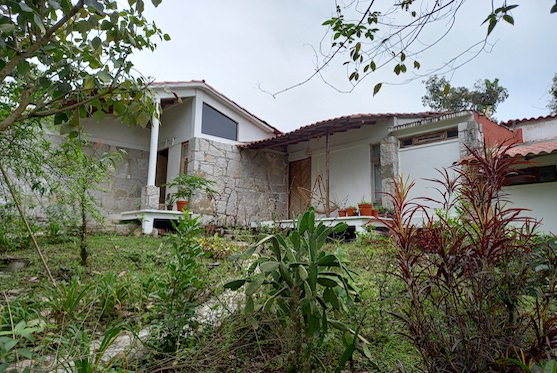
As for the sustainable housing program, in 2006 the Tosepan decided to form a cooperative called "Tichanchiuaj" ("Together we build our houses" in Nahuat) to be able to get hold of and supply the communities with durable, well-priced and preferably locally manufactured construction materials to build and rehabilitate their houses. Another goal was also to help incorporate family orchards and green technologies (for the use and exploitation of solar energy and rainwater, recycling of agricultural waste, and so on) in order to make the best use of them.
Could strategies like these make my project more self-sustainable? click
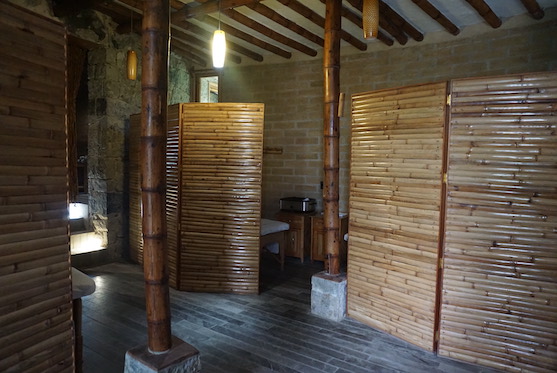
In 2008, the communities decided to create the "Tosepan Ojtatsentekitinij" ("Together we work bamboo" in Nahuat) to produce and transform bamboo for different uses (such as homes in the housing program) and in 2009 the women of the region succeeded in launching their own cooperative (the "Tosepan Siuamej", "Women united" in Nahuat) to produce and market products that would not only give them some economic independence, but also ease their household chores giving them more time for themselves and their projects. They bought, for instance, machines to make tortillas, mills, and other items.
Could strategies like these make my project more self-sustainable? click

Because public health services (doctors and drugs) were insufficient, in 2009 the communities formed the cooperative "Tosepan Pajti" ("Health is life for all" in Nahuat). Through it, they have opened health centers in several communities where they perform clinical analyses, offer drugs at a low cost and provide medical assistance with the support of intern doctors who carry out their internships there thanks to agreements that the cooperative has signed with universities. Also, the cooperative trained a group of health promoters who have the task of approaching the communities, organizing hygiene campaigns and health days, giving workshops and making home visits, all with the intent of preventing illness rather than only treating it. These home visits are very important because promoters encourage each family to appoint their own health "guardian" to look out for situations that could be putting the health of family members at risk (such as poor hygiene habits, nutrition, garbage management, household upkeep, and others); the guardian then passes the report on to the promoters. Based on this information, the promoters provide support to families by leveraging resources from different Tosepan cooperatives to provide care in a comprehensive way by, for instance, offering health credits, medical care, economic support to improve housing conditions, and other services.
Could strategies like these make my project more self-sustainable? click


Some years later, in 2017, the cooperative "Pisilnekmej" ("small bees" in Nahuat) was also launched to produce and market honey.
Could strategies like these make my project more self-sustainable? click
To further consolidate the different cooperatives and support their work, Tosepan formed the civil association "Yeknemilis" ("Good Life" in Nahuat) in 2002, which is focused on providing them with technical assistance and running the Training Center. Also, with the same goal in mind, in 2012 it founded the radio station "Tosepan Limakxtux" ("Our Universe" in Nahuat) to broadcast the work being done among the communities. Since by law the Tosepan Savings Fund can only make loans to individuals and not to cooperatives, that same year it also created the "Tosepan Foundation". This Foundation would help secure financing and subsidies to help primarily those cooperatives that have difficulty making their own resources, such as the Health project. And it would also support the school that the communities in Cuetzalan opened in 2006 to promote the cooperative culture among the new generations and to combine formal education with agricultural and entrepreneurial activities so that children might consider the possibility of staying in their communities when they finish school instead of migrating, or returning to help improve them in the future. Nowadays, the school "Tosepan Kalnemachtiloyan" ("The school belongs to everyone" in Nahuat) serves around 100 children with the support of teachers who originally came to do their professional internships as teacher trainees and then decided to stay. Its system is accredited by the National Council for the Promotion of Education (CONAFE) and is similar to the Montessori system, teaching preschool through high school in the local language as well as in Spanish. The school also encourages cooperation between families so that children have a better diet, as parents have to take turns preparing nutritious meals and financing them.
Could strategies like these make my project more self-sustainable? click





Because diversifying the cooperatives has been aimed at addressing the different needs of the member communities in a comprehensive way (their health, economic needs, and so on), in 2007 the organization decided to become the Union of Tosepan Cooperatives (Unión de Cooperativas Tosepan), which would help the cooperatives coordinate, share their resources and support each other (the hotel would help the producers test their products, the marketing company would help sell them, the savings and loans fund would help build houses, the Tichanchiuaj cooperative would help get materials, and so on). Since then, the Union encourages the training of each of the cooperatives to improve the quality of their services and to ensure they are always relevant to local needs. To this end, the Union gives each of them a large measure of organizational and financial autonomy, and supports the training of their members so that they are less and less reliant on outside experts. It also seeks to ease their work by tackling many of the common obstacles.
Could strategies like these make my project more self-sustainable? click


Combating threats to the Union’s projects
To create better conditions for the cooperatives' work and for life in the communities in general, Tosepan frequently bids for contracts to build public works such as the school, and to rehabilitate and build roads, among others.
Could strategies like these make my project more self-sustainable? click
It also devotes a great deal of effort to encourage the communities to organize to defend their territory from growing delinquency, local abusive leaders, big enterprises and extractive projects such as mining, hydroelectric plants or fracking. To do so, it has used a host of different strategies. Among the most important ones is the involvement, together with other organizations and local authorities, in the creation of the Cuetzalan Integral Territorial Planning Committee (COTIC), an organization that aims to regulate the use of the territory, and in which the communities make up the majority and make decisions that authorities have to comply with. Together with COTIC, Tosepan helped draft a land-use plan, which is a legal instrument through which they jointly defined the permitted and non-permitted uses of their territory, setting limits to the mega-projects that would usually undertake activities without even consulting them. With this ordinance, the communities are better protected because they have more tools to fight back through institutional channels (placing legal safeguards, say) against companies or governments that launch projects without obeying their terms and conditions (because they would be incurring in an illegal act). Another similar strategy was put together with the Tiyat Tlali Council, another group they created to join forces with organizations from other parts of the highlands to defend the territory of more than 200 towns. Together they established local defense committees and declared their region "free of extractive projects" with the aim of setting a precedent in case companies or institutions have intentions of undertaking operations in their territory.
Could strategies like these make my project more self-sustainable? click

But besides all this, Tosepan has organized many activities to stop interventions that the communities consider detrimental to their lands, their economy or their health. To name a few, they have held sit-ins, marches, encampments, blockades, occupation of town halls, forums and informative caravans to warn the communities about the risks of entering into deals with the companies. Furthermore, since political parties normally back interests that are foreign to the communities, the Union of Cooperatives has also used the strategy of running independent candidates in local elections to defend its interests.
Could strategies like these make my project more self-sustainable? click

The organization
By 2022, the work of the Union and its cooperatives had attracted more than 40,000 members organized in 430 local cooperatives in the highlands of Puebla and the state of Veracruz. Local cooperatives are formed when they apply to join the Union of Cooperatives, jointly explore the options for linking its programs to the demands of their community, learn about its rules, and form a local board of directors, usually with people who are trusted by the community and whose social work is widely recognized.
Could strategies like these make my project more self-sustainable? click

Such widespread participation has been possible thanks to the Union's sophisticated organizational system: after meeting with community members to learn about their proposals and needs, each local cooperative appoints a delegate who has one vote in the General Assembly of Delegates, which meets once a month (on market days) in the town of Cuetzalan to make joint decisions (such as the creation of new cooperatives or the implementation of training courses in response to needs raised at the Assembly). This Assembly is the highest authority of the organization and it holds discussions on the suggestions and concerns of the sister cooperatives (the savings fund, the health cooperative, the women cooperative, and so on), as well as those of the civil associations, the school, and the various local cooperatives. On some occasions, the Assembly considers work proposals submitted to the Union of Cooperatives from outside groups, or invites local authorities and candidates to share their projects to see if Tosepan supports them or not.
Could strategies like these make my project more self-sustainable? click


Because the Union of Cooperatives has grown so much, assemblies are now held not only in Nahuat but also in Tutunaku and Spanish so that all attendees can participate. The Assembly has a Management Board and an Oversight Board (which monitors compliance with the agreements reached), which are democratically elected by all the members after following a long and careful validation process. The process involves, first of all, collectively outlining the regional development plan that everyone wants for the communities. Then, the communities nominate people they believe can carry out this plan. After taking a training course on the work of Tosepan, these community nominees then submit their proposals to the Assembly so that delegates can choose the most suitable people.
Could strategies like these make my project more self-sustainable? click

With the support of its Training Center, Tosepan has formed a group of people called "promoters" who are also nominated by the communities. Like the health promoters, these promoters must also speak the local language as well as Spanish, and are in charge of helping organize the communities, providing technical assistance to members, and linking them to services offered by the sister cooperatives (bringing them, for instance, the products of the savings fund with a device they call Tosepanmóvil, or handing out piggy banks to children so they can start their own savings fund). For this reason, promoters play a very important role in integrating the different projects of the Union of Cooperatives, grounding them in the communities and drawing new participants in.
Could strategies like these make my project more self-sustainable? click
Reach
The Union of Tosepan Cooperatives project has shown the enormous potential that organization among communities has to improve their quality of life and promote local development on their own terms. With this project, the communities in the northern highlands of Puebla and part of Veracruz have enabled thousands of families to solve many of their needs with their own resources and labor, access various products and services, sell their crops and products at a better price, make better use of their local resources and create jobs within the communities themselves (building houses, repairing roads, teaching courses, and so on).
Could strategies like these make my project more self-sustainable? click
The required use of local languages in all the services provided by the sister cooperatives, in assemblies and at school has not only helped reappraise and revitalize these languages, but has also brought information and attention to more people, since the majority of the local population is indigenous.
Could strategies like these make my project more self-sustainable? click
The training courses, the cooperatives and the school have all been preparing the new generations of cooperative members who will uphold and enhance the communities' project in the future. The outstanding processes of democratic participation of the population in the cooperatives' projects and the partnerships with universities, social organizations, independent experts and other communities have set the grounds for gradually solving many of the concrete needs that concern members, and for improving their quality of life in a comprehensive way, in keeping with their needs and aspirations, and with a focus on regional development, all of which are Tosepan's objectives.
Could strategies like these make my project more self-sustainable? click
Collective action has enabled Tosepan communities to protect their territory and jointly plan the path they want to follow. In this regard, in 2017 the Union of Cooperatives spent almost a year putting together a wide survey among all its thousands of members, community by community, to identify their vision and hopes for the next 40 years of the project and, from this, drew the main lines of action on which it is currently working (food sovereignty, protection of territory, autonomy to organize, decent housing, and so on).
Could strategies like these make my project more self-sustainable? click
What can we learn from these strategies to address the needs of our communities through solidarity and organization?