Play Video
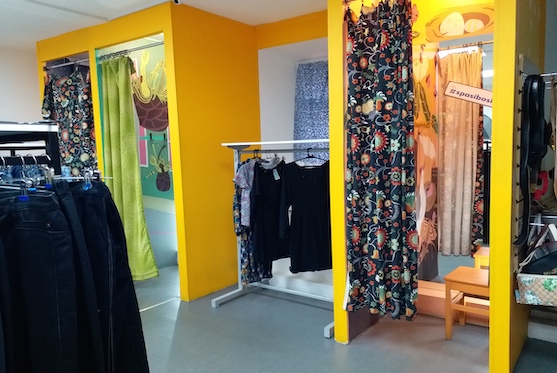
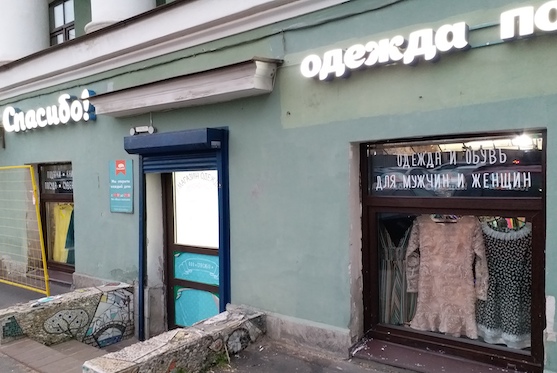
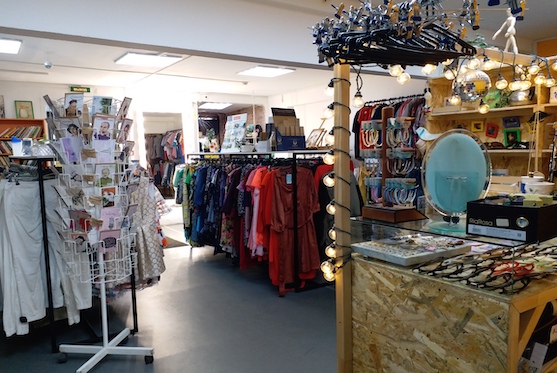
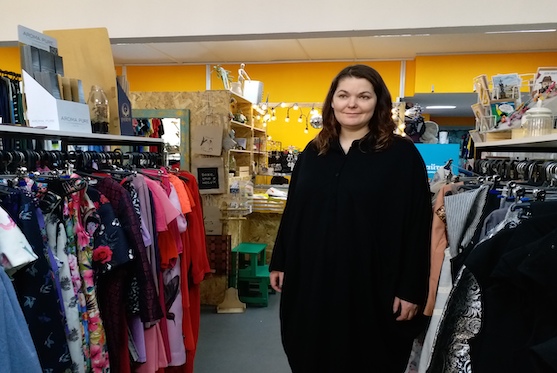
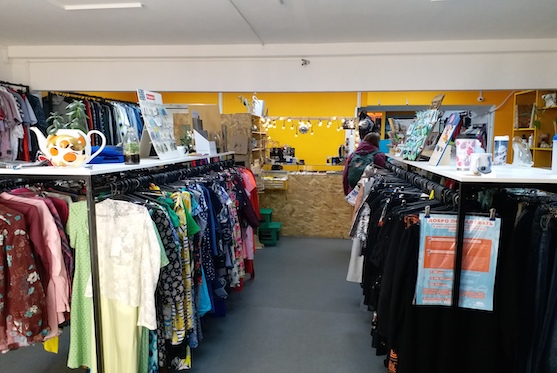
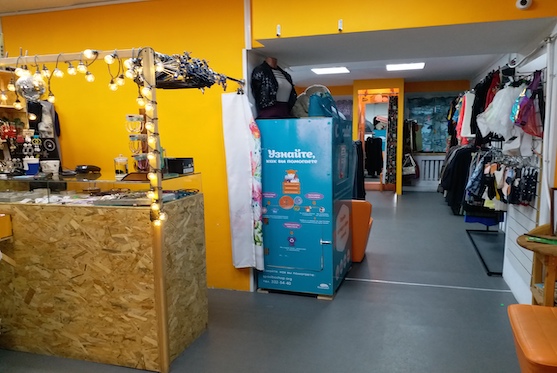
Spasibo! is a thrift store in St. Petersburg, Russia, that collects, recycles, redistributes and sells second-hand clothing to reduce waste in the textile industry while using the proceeds to support various social projects.
info 2019
Despite the fact that the textile industry is the second most polluting industry in the world, clothing production has doubled in recent years and the overall dynamics of consumption have been marked by enormous waste: people buy twice as much clothing, wear it for half the time they used to, and when they no longer want a garment, they burn it or throw it in landfills (more than 70% is wasted!) instead of recycling it (less than 1% of clothes are recycled) or donating it to people in need.
How to reduce textile industry waste?
Many companies and social organizations are devising alternative models of consumption that seek to be fairer and more environmentally friendly. One example of these are thrift stores, which have emerged in several countries since the 1970s with the proposal to collect and resell clothes in good condition that people no longer want or need, so as to give these items a new use instead of throwing them away.
Could strategies like these make my project more self-sustainable? click
In 2010, a group of young people in St. Petersburg, Russia, realized that the situation in their city was not very different from that of the rest of the world, since people gave away 5% of the clothes they no longer wanted to their friends, donated another 5% to people in need, and threw away the remaining 90%!. So, inspired by the proposal of thrift stores and the ideas of circular economy they decided to create their own version of the model and opened Spasibo! (спасибо!), a store aimed at recovering discarded clothes to make better use of them while supporting different social projects at the same time. This mean that part of the clothes they collected would be redistributed to social organizations that serve populations that could benefit from them. Another part would be recycled. And another portion would be sold in one of their thrift stores and part of the profits would be used for Spasibo’s own operations and another part to financially support different social projects (shelters, cooperatives, and so on).
Could strategies like these make my project more self-sustainable? click
Since Russia does not provide the legal status of a social enterprise, Spasibo! decided to launch its project by registering as a company because although its objective was to help solve social problems, it realized that by registering as a non-governmental organization it would not be able to yield the necessary profits to maintain its project in a sustainable manner ––much less to support other social initiatives, as it intended to do (charitable organizations can only obtain 30% of their resources from sales). So, by registering as a company, Spasibo! would not be able to obtain government support, but would have the opportunity to make a profit to finance its project in a free and cost-effective way as well as to support other social initiatives.
Could strategies like these make my project more self-sustainable? click
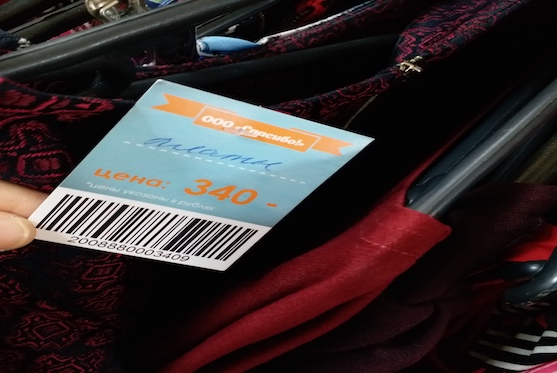
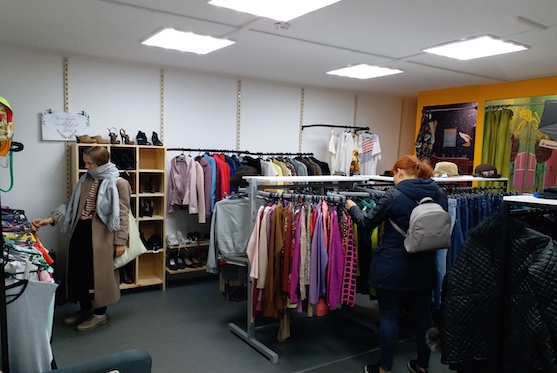
Once registered, Spasibo! placed 120 containers in different areas of the city, making sure to install them in places protected from the weather to ensure durability (shopping malls, offices, etc.) and launched 7 thrift stores throughout St. Petersburg to reach more people (nowadays, in 2021, there are 4 in operation). Spasibo! collects clothes from these bins, mends them and sells them at prices that are very competitive with the traditional market. While many customers visit their stores because of these prices and the type of clothes they sell (Spasibo! did a market study to create a brand according to local fashion), other people buy from them because they share the objective of their project and want to support it.
Could strategies like these make my project more self-sustainable? click
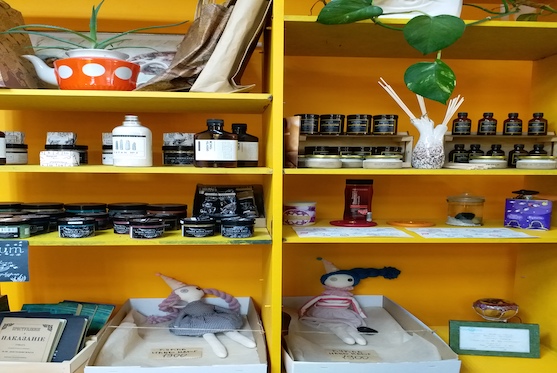
- A further portion is used to support other social organizations: in addition to helping them by giving them a space in their stores to sell their own products or souvenirs, Spasibo! supports them with financial assistance and clothing. Since Spasibo! realized that some of the recipient organizations were reselling clothes instead of using them for their beneficiaries, nowadays, Spasibo! carefully reviews the profile of the requesting organizations before making any donation and asks them to fill out a form to evaluate the veracity of their needs and their intentions in order to avoid repeating these past abusive experiences. In the case of financial assistance, Spasibo! carefully checks that the organizations being supported have a good reputation, have been in existence for at least three years and, above all, that their projects help solve problems at the root ––in other words, that they are building an alternative reality–- in order to ensure that the aid has the greatest possible impact.
Could strategies like these make my project more self-sustainable? click
- Nowadays the company also invests part of its profits in advertising because it has realized how important it is to attract new support and clients, and that the way it used to promote itself was not enough (at the beginning of the project, Spasibo! bet on public relations by attending festivals, conferences and television programs to achieve free promotion and attract donors).
Could strategies like these make my project more self-sustainable? click
- And, as well as investing its profits in these areas, Spasibo! also invests as much as it can in a stability fund, that is, a savings fund that allows it to meet the commitments it has made with other social initiatives and to cover operating expenses (especially paying employees) when sales are not going well, the market suffers setbacks or donations of clothes are insufficient.
Could strategies like these make my project more self-sustainable? click
Like any company, Spasibo! is legally required to be organized with a hierarchical structure and its CEO must take legal responsibility for the organization's decisions. But in its day-to-day work, the project’s board is organized with more of a cooperative management scheme in which its 10 members meet at least once a month to distribute the tasks of the project in commissions and make decisions democratically (such as which organizations to support for example) based on five-year plans and objectives that are defined among everyone.
Could strategies like these make my project more self-sustainable? click
Also, because Spasibo! is established as a company and makes a profit, it cannot work with volunteers, so it works with 80 employees (including the board of directors). For this same reason, Spasibo! tries to attract investors, although it does not close its doors to monetary donations. In fact, only once did it receive a donation that helped strengthen its financial self-sustainability: a man donated money to the project in exchange for a temporary share in the company. This money was invested in opening new stores and buying a recycling machine that not only has saved Spasibo! the money on outsourcing that service, but has also helped the project make an extra income. When the donation money was recovered, Spasibo! returned it to the donor, who was happy that the organization had made good use of his support.
Could strategies like these make my project more self-sustainable? click
As one of the first organizations to introduce the thrift store model in Russia, Spasibo! attracted the interest of many groups that wanted to replicate this initiative, so, eager to expand the scope of its project, Spasibo! initially spent a lot of time mentoring these organizations. But the project soon realized that only 10% of these organizations managed to survive and, moreover, that several of them had very different ethical principles from its own. So Spasibo! decided to change its strategy to make better use of its time and resources while continuing to support these organizations and started an incubator, that is, a project to help the development of initiatives interested in following this model with investment and training for a defined period. Unfortunately, the incubator model also failed, as only 2% of the supported organizations managed to launch their projects successfully, so Spasibo! decided to change its strategy again: on the one hand, it prepared online guidance materials so that organizations interested in replicating its initiative could continue to make the most of its experience and know-how. On the other hand, it began to explore a franchising model to further scale its project in a more effective and efficient way. To do so, Spasibo! hired a team of experts in this model to help systematize its franchise proposal, identifying its original or differentiating elements (what makes Spasibo! different from other thrift stores) in order to patent them. The team also helped design a 5-year plan with specific objectives to develop the franchises. Nowadays Spasibo! is working on this plan and as similar organizations are already well established in Moscow, it will most likely start by setting up the first franchises in cities such as Nizhny Nodgorov and Kazan.