Play Video
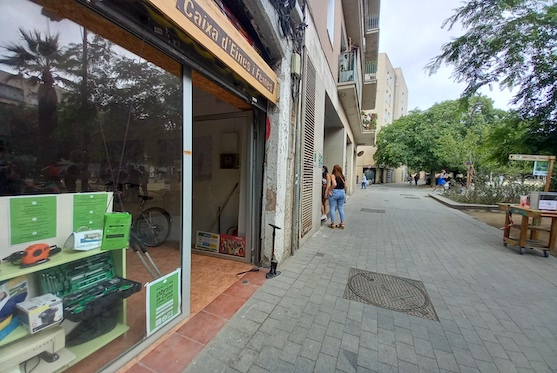
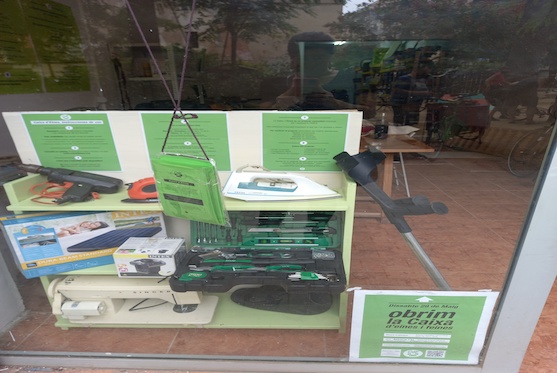
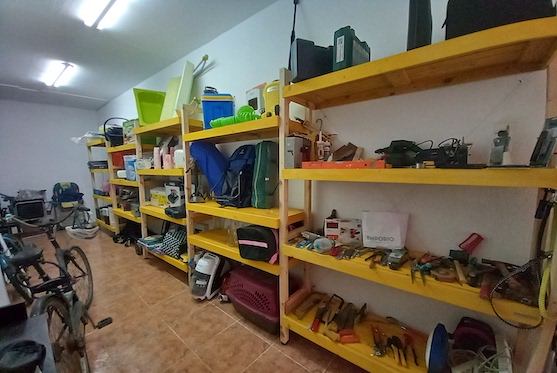
The Library of Things and Services (Caixa d'Eines i Feines) of Barcelona's Old Quarter collects tools, wheelchairs, sewing machines and other objects that the people of the neighborhood no longer use or may need only occasionally and puts them at the service of everyone. With this initiative, things are used by more people and for longer, reducing waste and helping household economies. This project also provides workshops to promote the exchange of services among neighbors and the use of the library's items as a means to solve everyday needs.
info 2021
How often do you use the hammer you have at home, or the crutches you bought that time you were injured? We spend a lot of money on products that we only need occasionally or items we simply discard once we use them. Worldwide, this and other forms of misuse of resources not only affect our personal finances but are also creating more than 2 billion tons of waste per year and causing serious environmental damage.
How can we make better use of the things we have to improve our finances and reduce our environmental impact?
For decades, many communities around the world have been creating libraries of objects to make better use of their things by sharing them and, in so doing, building alternative forms of solidarity economy and circular economy. Object libraries (or banks) lend out sewing machines, tools, toys, wheelchairs and other things that people only use temporarily or suddenly and which are typically donated by members of the neighborhood or community, so that people do not have to actually buy them and can instead use them only as needed. In this way, items are used by more people and for longer, reducing waste and helping household economies.
Could strategies like these make my project more self-sustainable? click
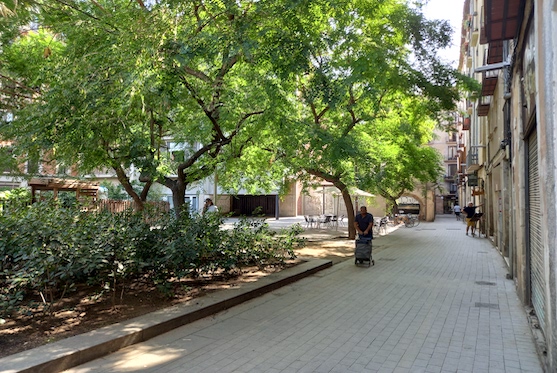
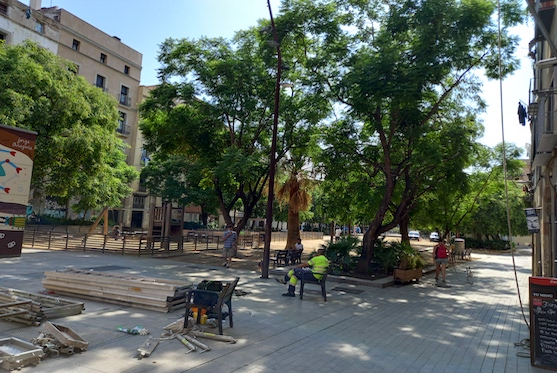
In 2015, a group of friends, some of them neighbors, learned about this alternative model of consumption and decided to open a local library of things and services for the community of Pou de la Figuera in Barcelona's Old Quarter, a neighborhood with many public housing units. To launch the project, the team began by researching similar initiatives and interviewing some of them ––then, having a better idea of how these initiatives work, the team formed the civil association CERCA (Comunitats, Eines i Recursos Casc Àntic) in order to raise the necessary resources to create the library. In 2020, the team managed to win a competitive government grant that provided their start-up funds on the condition that they cover at least 20% of the project's total budget with their own resources. The team leveraged the funding to hire a part-time staff member to help devise a strategy to raise resources to meet this commitment, manage the project, secure and set up a location in the middle of the neighborhood's main square so that it would be visible and easily accessible to neighbors, and serve users.
Could strategies like these make my project more self-sustainable? click
Because the funding was obtained at a time when the confinement measures to contain the Covid-19 crisis restricted the chances of approaching neighborhood residents to talk about the new project, the first thing the group did once the premises were secured was leverage its contacts with other local organizations to reach people through social media. Using an online form, the group asked residents what they would like the library to have and what tools or things they did not use or barely used they were willing to share with the community. While donations were the priority to optimize existing local resources, the team leveraged the funding to purchase things that people had suggested and that had not been secured through donations, as well as other things that they themselves identified might be of interest to the community while brainstorming amongst themselves. Finally, in mid-2021, the Library of Things and Services (Caixa D'Eines i Feines in Catalan) opened its doors to the public.
Could strategies like these make my project more self-sustainable? click
In order to make a catalog of the items the library procured and to allow the public to book loans in advance, the Caixa D'Eines i Feines made use of an open-source software that is available for the management of this type of libraries called Lend Engine. Although this software has free versions, the Caixa opted for a low-cost version to store more data and serve more users.
Could strategies like these make my project more self-sustainable? click
The Caixa decided to ask users to become associates of the library by paying an annual membership fee and to charge for the loan of items, which would allow it to self-finance the project, pay its operating expenses (such as the software, rent and maintenance of the premises, the salary of the person in charge of managing the project, etc.), and meet the 20% contribution required by the government funding. But knowing that not all neighbors have the same economic capacity and so as not to leave anyone out, the team decided that the membership fee would only be 10 to 20 euros, depending on the user's capacity, and the fee for the loan of items would also be symbolic and definitely cheaper than elsewhere (1 to 5 euros per week depending on the case). In addition, the library chose to receive payments directly on the premises (rather than online) to give users the opportunity to expose their situation and, if necessary, to exempt them from paying. This flexibility shows that the library is betting on trust in its staff and users, and on their co-responsibility to take care of, return and pay for the things they borrow with full regard for their community and for this project that seeks to benefit it.
Could strategies like these make my project more self-sustainable? click
Another important objective of the Caixa has been to promote proximity and small-scale economy and to strengthen relationships and support among neighbors through the exchange of professional services among themselves. In other words, the Caixa wants to leverage the network of library associates to link those who are service providers or owners of small local businesses with other neighbors, with a view to enable exchanges, encourage the use of local services or products, identify common interests, or even establish agreements to work together.
Could strategies like these make my project more self-sustainable? click
In this respect, although their website catalog already allows members to register and publish their profiles with offers and requests (for cleaning services, therapies, private classes, etc.), the Caixa is only just taking its first steps to set up and consolidate this network of service exchanges. For instance, it is currently organizing various types of activities and workshops right in the middle of the neighborhood square so that neighbors who have not yet done so learn about the project and feel encouraged to participate. At the same time, registered members also get to know each other, share knowledge on how to best use the library's items to solve everyday problems, and share ideas on how to consolidate the service library.
Could strategies like these make my project more self-sustainable? click
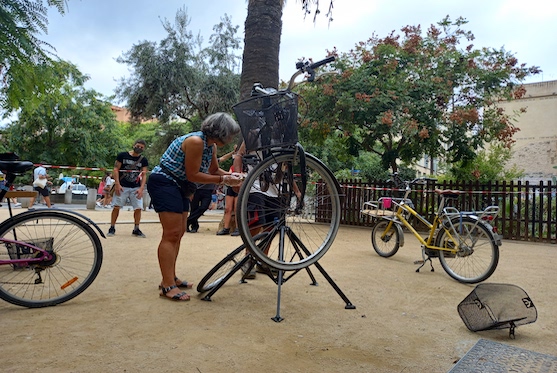
The workshops that the Caixa provides are usually on topics relevant to the goal of extending the lifespan of objects and making people aware of the ways in which they can be better utilized. This is why the Caixa invites local organizations interested in making themselves known, as well as friends willing to support the project, to share their knowledge with neighbors by offering workshops on how to use free software such as Linux, how to repair their own bicycles, clothes, electrical appliances and other such items by leveraging objects available in the library such as sewing machines or tools. The workshops are free so that everyone can benefit from them, but voluntary fees are welcome to support workshop providers. The Caixa promotes them mainly on Facebook, which is its main means of contact with users, but the goal is that they can gradually be scheduled according to the demand of neighbors, as is done in the "suggested” groups of social media.
Could strategies like these make my project more self-sustainable? click
Despite the difficulties in obtaining funding and launching the project in the midst of the Covid-19 pandemic, the Caixa de Eines i Feines has managed to set up its premises, create a rich library of items at the service of its neighborhood, and associate more than 90 people in a very short time! The challenge it faces today is to consolidate and persist, mostly by getting members to become more involved with the project and actually start changing their habits of consumption, such as not purchasing things that can now be borrowed from the library.
Could strategies like these make my project more self-sustainable? click
What can we learn from these strategies to make better use of our families, friends or communities resources?
Support the Library of Things and Services of the Old Quarter!